

 by
by I’ve been reading Mike Vaccaro’s column in the New York Post for over 20 years. During that time, I’ve had the pleasure of meeting him and working alongside him here and there, covering the 2009 World Series and seeing him at the MLB Winter Meetings.
He’s a gentleman, always has been, and whenever I’ve hosted a podcast or radio show, he’s always been willing to appear on any show, no matter the platform.
He’s also incredibly generous, giving my booth “Gotham Baseball: New York’s All-Time Team” a great review, mentioning it in his “Vac’s Whacks” column, and providing me a very complimentary “blurb.”
Vaccaro is also a best-selling author, and I’ve read every one of his books; Emperors and Idiots: The Hundred Year Rivalry Between the Yankees and Red Sox, From the Very Beginning to the End of the Curse; 1941: The Greatest Year in Sports, and, The First Fall Classic: The Red Sox, the Giants, and the Cast of Players, Pugs, and Politicos who Reinvented the World Series in 1912.
Every one of these books is excellent, each meticulously researched and delivered with a historical narrative that vividly captures the essence of the eras, the personalities, and the locales they describe. I couldn’t recommend them more highly.
Vaccaro’s newest book, Bosses of the Bronx: The Endless Drama of the Yankees Under the House of Steinbrenner, further demonstrates his mastery. His writing transports readers into the orbit of “The Big Stein,” documenting his ascent as the Yankees’ owner starting in 1973, his dramatic downfall amidst the Howie Spira controversy, his subsequent exclusion from the sport, and his ultimate return in 1993.
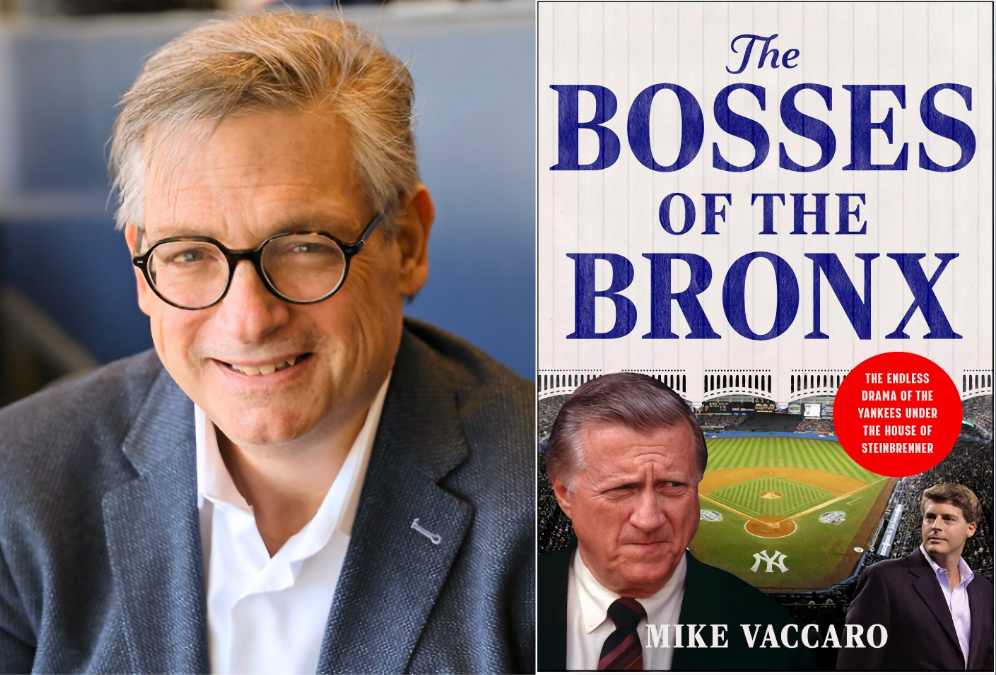
Every time I read a baseball book, I’m always hoping to learn something new. I’ve read several books on Steinbrenner, including Bill Madden’s Steinbrenner: The Last Lion of Baseball, “Steinbrenner’s Yankees: An Inside Account,” by Ed Linn, and “Steinbrenner!” by Dick Schaap, each of which is excellent.
As expected, Vaccaro’s “Bosses of the Bronx” breaks new ground in several ways, especially in the transition from George’s vice-like grip on the franchise to his son Hal’s eventual elevation to principal owner.
I especially enjoyed the chapters that deal with George’s relationship with Gene Michael. A trusted confidant who served as a player, then manager, then GM, and perhaps the person most responsible for the construction of baseball’s last true dynasty from 1996-2000, winning four World Series titles in six years.
The battles with Billy Martin and Reggie Jackson are well chronicled elsewhere; however, Vaccaro unearthed a lot of these interactions in a way I’ve never experienced before.
There are a lot of anecdotes that even the most diehard Yankees fans may have never heard or read about, and rather than cite them here, I must insist you read the book and experience them for yourself. I especially enjoyed some great stories about Hank Steinbrenner, George’s other son, who passed away in 2020 at the age of 63.
Vaccaro has also captured the essence of the way the Yankees now do business under Hal Steinbrenner, an almost upside-down version of how his father ran the team; a calm, professional who prefers to only communicate with the media in a very precise and corporate style.
Do yourself or the Yankees fan (and frankly, any baseball fan), in your life and purchase this book; they will thank you for it.
Vaccaro will appear on Friday’s “Gotham Baseball LIVE” podcast, hosted by Peter Schwartz and me. The episode will drop at 2 p.m. and can be found on gothambaseball.com/podcasts
